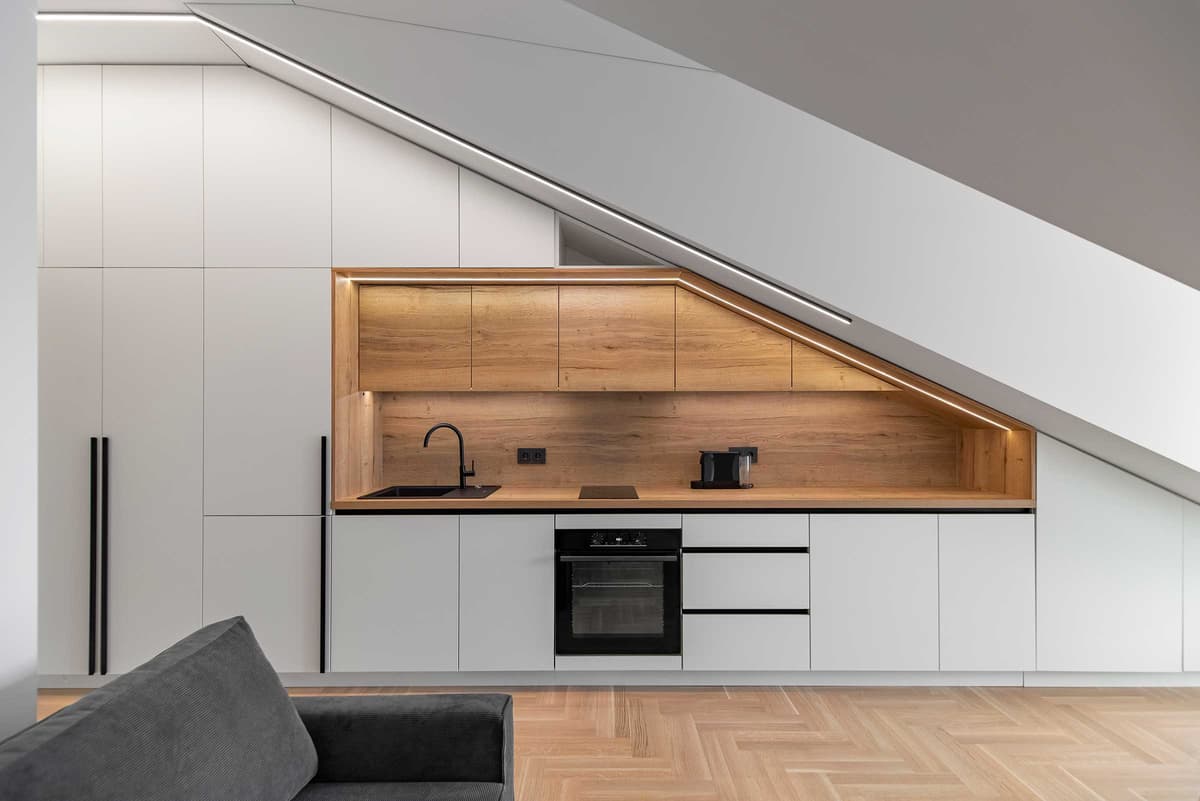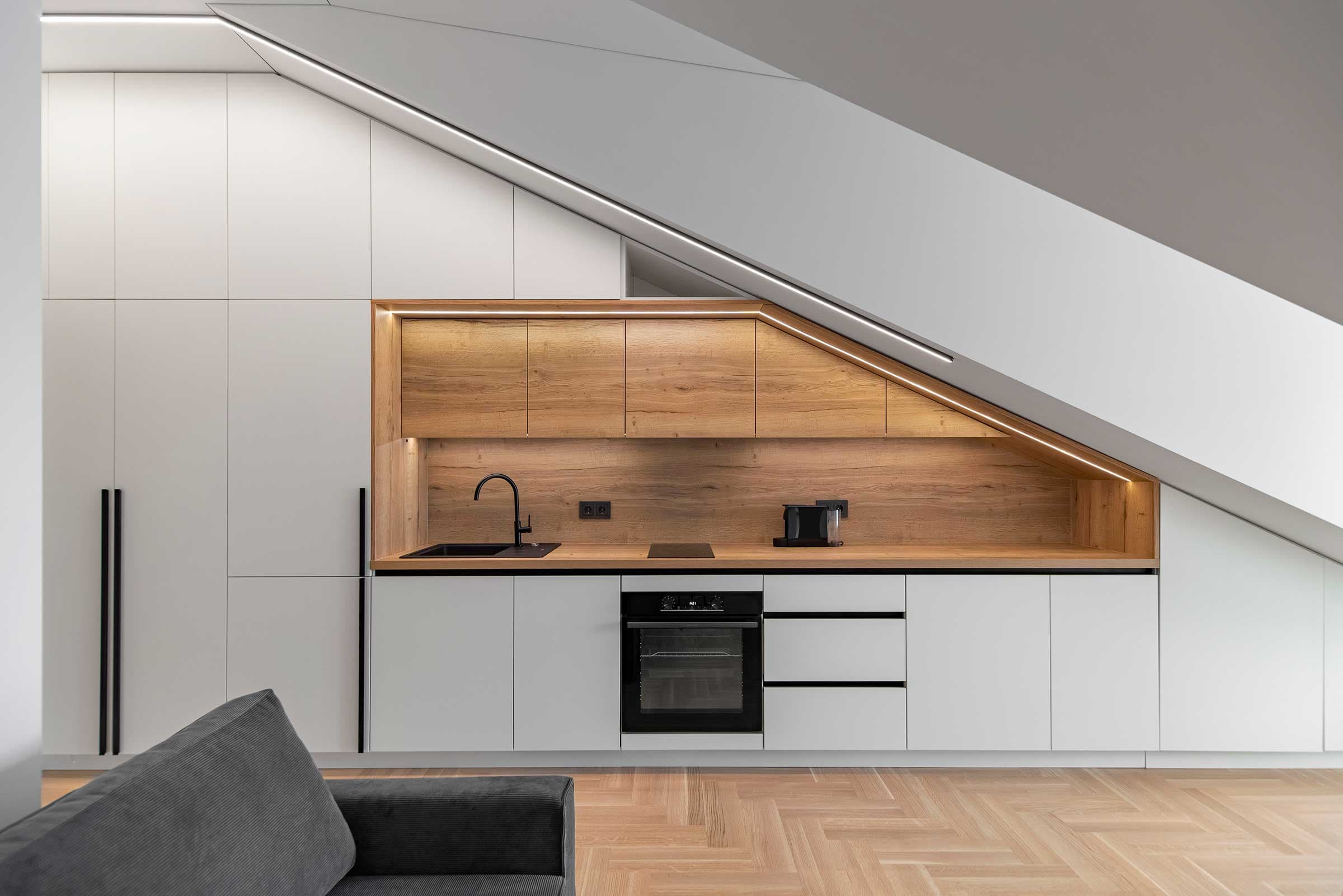
Užbaigta prabangi vila neturėtų virsti dirbtuvėmis. Tačiau daugelyje aukštos klasės gyvenamųjų projektų, kai akmens grindys jau paklotos, sienos nudažytos, apšvietimas sumontuotas, o spintos ruošiamos pridavimui, montuotojas vis dar atidaro įrankių dėžę, įjungia diskinį pjūklą ir trumpina baldus jau užbaigtoje erdvėje.
Architektams, interjero dizaineriams, vystytojams ir generaliniams rangovams tai viena nemaloniausių individualios baldų gamybos realybių. Pjovimas objekte pasitaiko dažnai. Kartais jis neišvengiamas. Tačiau dažnai tai ženklas, kad ankstesniame etape nepavyko matavimas, tolerancijų planavimas arba gamybos paruošimas.
Kodėl užbaigtoje viloje atsiranda diskinis pjūklas?
Diskinis pjūklas užbaigtoje viloje atsiranda todėl, kad baldai neatitinka realių objekto sąlygų. Spintos šonas gali būti 12 mm per ilgas, virtuvės užpildas gali atsiremti į akmens angokraštį, siena gali būti išlinkusi, grindys gali turėti nuolydį arba projekte nebuvo palikta vietos realioms statybinėms tolerancijoms.
Tipinė grandinė atrodo taip:
- Baldai projektuojami pagal brėžinius.
- Brėžiniai ne visiškai atitinka užbaigtą vilą.
- Baldai pagaminami pagal brėžinį.
- Baldai atvyksta į objektą.
- Plokštė atsiremia į sieną, vamzdį, lubas, grindis, akmenį ar angokraštį.
- Montuotojas pjauna ją užbaigtoje erdvėje.
Pjūklas nėra pirma problema. Tai galutinis simptomas.
Ar pjovimas objekte visada reiškia prastą gamybą?
Ne. Nedidelis kontroliuojamas pritaikymas realiuose pastatuose yra normalus, ypač senose vilose, renovacijos projektuose ir erdvėse su nelygiomis sienomis. Problema nėra vienas tikslus koregavimas. Problema atsiranda tada, kai visa montavimo strategija remiasi užbaigtų baldų dalių pjovimu jau įrengtoje erdvėje.
Geri gamintojai stengiasi mažinti pjovimą objekte. Vidutiniai gamintojai su tuo susitaiko. Silpni gamintojai tuo remiasi.
Kiek kainuoja pjovimas objekte?
Pjovimas objekte kainuoja kokybę, laiką, švarą ir riziką. Pjovimas gamykloje yra kontroliuojamas, su dulkių nusiurbimu, pakartojamas ir po jo galima atlikti tinkamą briaunų apdailą. Pjovimas objekte yra lėtesnis, dulkingesnis, mažiau tikslus ir vyksta erdvėje, kuri gali būti jau pilnai užbaigta.
| Kainos sritis | Kas nutinka |
|---|---|
| Kokybė | Pjovimas objekte retai prilygsta CNC pjovimui ir gamykliniam briaunavimui |
| Valymas | MDF arba MDP dulkės patenka į kilimus, ventiliaciją ir minkštus paviršius |
| Laikas | Montuotojai minutes skiria darbui, kurį CNC atliktų per sekundes |
| Pažeidimų rizika | Užbaigtos sienos, grindys, plytelės ir sumontuotos dalys lieka pavojuje |
| Koordinavimas | Triukšmas trukdo kitoms komandoms ir pridavimo grafikui |
Prabangioje viloje ši kaina susitelkia į brangias apdailas. Vienas dulkinas pjovimas gali užteršti drabužinę, pažymėti akmens grindis, subraižyti lakuotą sieninę panelę arba priversti atlikti pakartotinį valymą prieš pridavimą.
Kodėl briaunavimas objekte silpnesnis nei gamyklinis briaunavimas?
Gamyklinis briaunavimas atliekamas kontroliuojant temperatūrą, spaudimą, apipjovimą, nuvalymą ir kampų suapvalinimą. Briaunos taisymas objekte paprastai yra paprastesnis, lėtesnis ir mažiau stabilus. Gamyklinė briauna yra gamybos proceso dalis. Briauna objekte dažnai yra gelbėjimo operacija.
Skirtumas svarbiausias čia:
- Spintų šoninės plokštės.
- Drabužinių lentynos.
- Vonios baldai.
- Virtuvės plokštės.
- Medijos sienos.
- Vyno kambariai, barai ir ekspozicinės spintos.
- Dažnai liečiami baldai, kurie valomi reguliariai.
Jei briauna matoma arba veikiama drėgmės, kai tik įmanoma, ji turėtų būti užbaigta gamykloje.
Kodėl brėžiniai ir realios vilos skiriasi?
Brėžiniai aprašo dizaino intenciją. Realios vilos turi statybines tolerancijas, tinko storį, akmens sluoksnius, plyteles, vamzdžius, lubų svyravimus, vėdinimo detales ir paskutinės minutės pakeitimus objekte. Siena, nupiešta tiesi, realybėje gali nebūti tiesi. Grindys, nupieštos lygios, realybėje gali turėti nuolydį.
Tai nereiškia, kad architektas klydo ar statytojas dirbo aplaidžiai. Pastatai yra fiziniai objektai, o fizinis darbas turi tolerancijas. Individualiai gaminami baldai turi planuoti šią realybę, o ne apsimesti, kad kiekviena erdvė yra idealus stačiakampis.
Kas yra pritaikymo juostos ir kodėl jos padeda?
Pritaikymo juosta yra papildoma baldo detalė, skirta susijungti su netobula siena. Vietoj to, kad užbaigtas korpuso šonas turėtų idealiai prisitaikyti, baldas turi mažą reguliuojamą arba apipjaunamą dalį, kuri gali sekti sienos liniją nepažeisdama pagrindinio matomo baldo.
Pritaikymo juostos padeda, nes koregavimas perkeliamas į kontroliuojamą vietą. Montuotojui gali prireikti nedidelio galutinio pritaikymo, bet dizainas to tikisi. Tai visai kas kita nei pjauti užbaigtą konstrukcinę plokštę todėl, kad niekas netelpa.
Kaip 3D skenavimas mažina pjovimą objekte?
3D skenavimas užfiksuoja realią erdvės geometriją: sienų kampus, lubų aukštį, grindų nuolydį, angas, komunikacijas, akmens angokraščius ir nelygius paviršius. Tada baldai projektuojami pagal realią vilą, o ne pagal idealizuotą stačiakampį.
Vertė yra ne tai, kad skenavimas panaikina kiekvieną montuotojo sprendimą. Vertė yra tai, kad problemos pasimato ekrane prieš gamybą. Koliziją CAD aplinkoje ištaisyti pigiau ir švariau nei diskiniu pjūklu užbaigtoje drabužinėje.
Kaip aukštos klasės gyvenamųjų projektų komandos turėtų to išvengti?
Architektai, interjero dizaineriai, vystytojai ir generaliniai rangovai turėtų reikalauti, kad gamintojas matuotų tinkamu metu, projektuotų su tolerancijomis, naudotų pritaikymo juostas ten, kur reikia, gamykloje užbaigtų matomas briaunas ir paaiškintų, koks pjovimas objekte leidžiamas. Geriausias laikas užkirsti kelią pjovimui objekte yra prieš pasirašant komercinį pasiūlymą.
Naudingi sutarties punktai gali būti paprasti:
- „Užbaigtose erdvėse elektriniai pjovimo įrankiai nenaudojami be išankstinio suderinimo.“
- „Matomos atviros briaunos turi būti užbaigtos gamykloje.“
- „Gamintojas patikrina objekto matmenis prieš gamybą.“
- „Pritaikymo juostos numatomos visur, kur baldai jungiasi su sienomis.“
- „Montavimo metodas suderinamas prieš pristatymą.“
Tokie punktai padaro paslėptas prielaidas matomas.
Ko klausti prieš pasirašant prabangios vilos baldų sutartį?
Klauskite, kaip gamintojas tvarkosi su objekto nuokrypiais, ar matuoja po apdailos darbų, ar naudoja 3D skenavimą, kurios briaunos užbaigiamos gamykloje, kaip projektuojamos pritaikymo juostos ir kokius įrankius montuotojai planuoja naudoti užbaigtose erdvėse.
Jei gamintojas sako „mūsų montuotojai viską pritaikys vietoje“, paklauskite, ką tiksliai tai reiškia. Pritaikymas yra normalu. Užbaigtos vilos pavertimas dirbtuvėmis - ne.
Dažniausiai užduodami klausimai
Ar nedidelis apipjovimas objekte priimtinas?
Taip, nedidelis kontroliuojamas apipjovimas gali būti priimtinas, ypač pritaikymo juostoms ir senuose pastatuose. Problema nėra vienas koregavimas. Problema yra pasikartojantis matomų, užbaigtų ar konstrukcinių dalių pjovimas, nes baldai nebuvo suprojektuoti pagal realias objekto sąlygas.
Kodėl dulkės tokia rimta problema?
Medienos dulkės yra sveikatos ir švaros klausimas. Jos patenka į spintas, ventiliaciją, minkštus paviršius, kilimus, akmens poras ir gretimas patalpas. Aukštos klasės gyvenamuosiuose projektuose dulkės taip pat reiškia papildomą valymą, pakartotinę patikrą ir pridavimo riziką.
Ar 3D skenavimas reikalingas kiekvienam projektui?
Ne. Paprastiems laisvai stovintiems baldams jo gali nereikėti. Daugiausia naudos gauna įmontuojamos virtuvės, drabužinės, sienų panelės, istorinės vilos, baldai prie laiptų ir sudėtingi nuo sienos iki sienos montuojami sprendimai. Kuo labiau baldas priklauso nuo objekto geometrijos, tuo labiau skenavimas padeda.
Ar gamintojas gali garantuoti nulį pjovimo objekte?
Jis gali to siekti, bet absoliuti garantija rizikinga, nes objekto sąlygos gali pasikeisti po matavimo. Geresnis pažadas yra procesas: vėlai atlikti matavimus, projektuoti tolerancijas, gamykloje užbaigti matomas briaunas ir riboti pjovimą objekte iki suplanuotų pritaikymo korekcijų.
Kokia didžiausia pirkėjo klaida?
Didžiausia klaida - rinktis pigiausią pasiūlymą neklausiant, kaip iš tikrųjų vyks montavimas. Žema kaina gali neįtraukti objekto matavimo, pritaikymo juostų ir gamyklinės apdailos, kurios vėliau padeda išvengti brangaus darbo objekte.
Kokie šaltiniai pagrindžia šią informaciją?
JK Health and Safety Executive paaiškina, kad medienos dulkės gali sukelti rimtų sveikatos problemų ir pateikia ribines poveikio vertes kietmedžio bei minkštmedžio dulkėms: https://www.hse.gov.uk/woodworking/wooddust.htm
HSE statybinių dulkių gairės taip pat rekomenduoja riboti dulkes keliančius darbus dar prieš jiems prasidedant, įskaitant tinkamo dydžio medžiagų naudojimą, kai tai įmanoma: https://www.hse.gov.uk/construction/faq-dust.htm