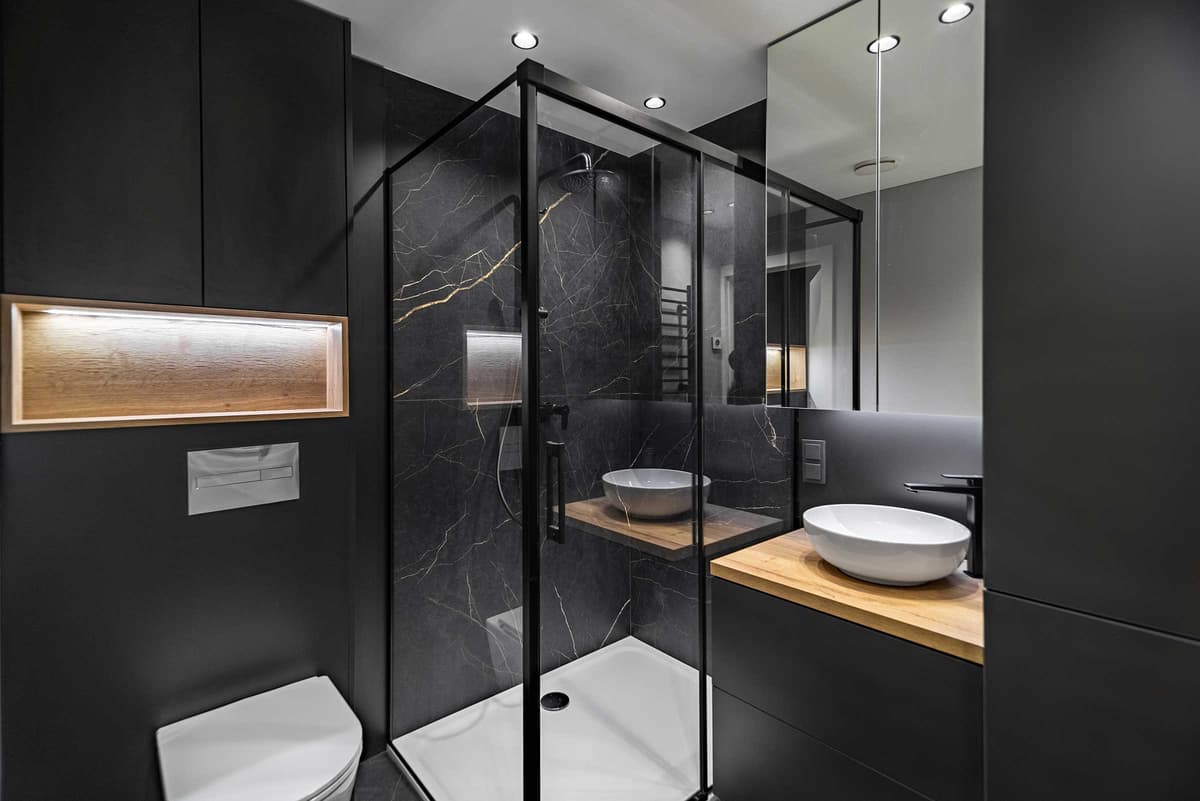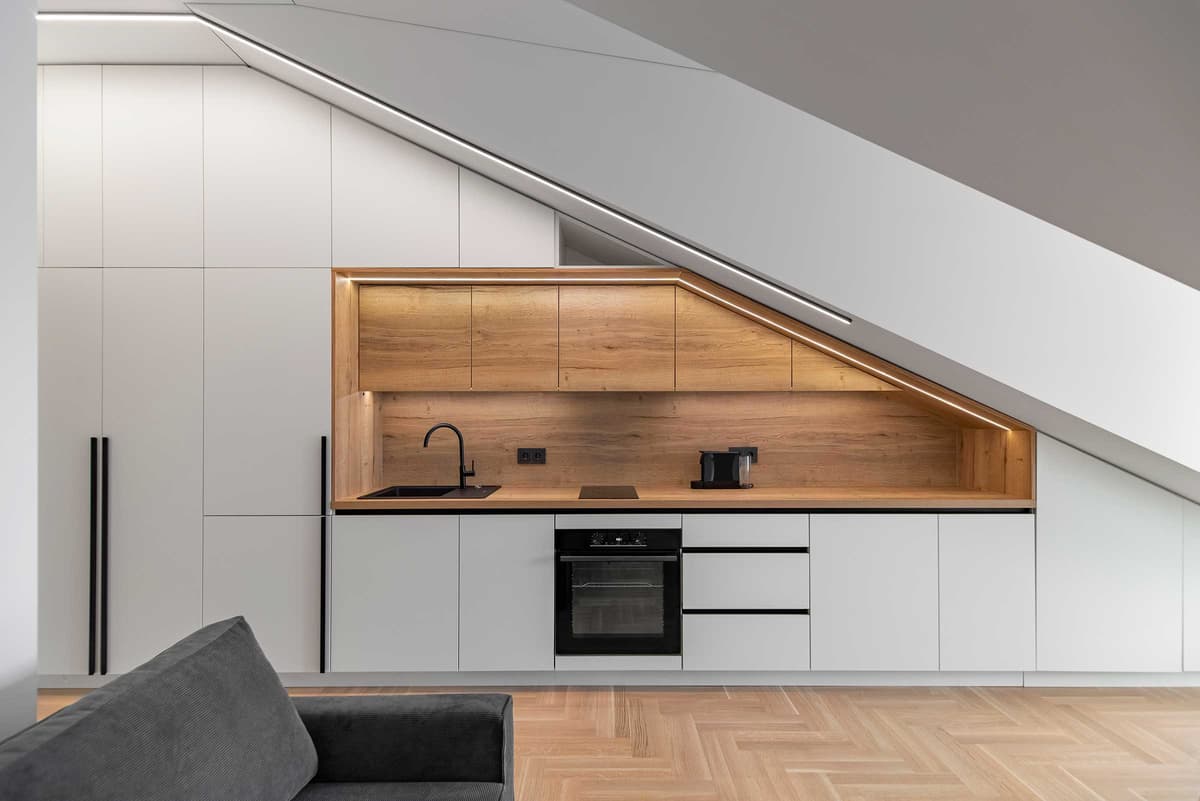
For B2B furniture projects, a beautiful portfolio is not enough. Photos show styling, lighting, photography, and the designer's vision. They do not prove that the supplier can repeat the result across a villa package, apartment development, hotel, restaurant, office, or multi-room project.
The real question is not "can they show nice finished furniture?" The real question is "can they manufacture, document, deliver, install, and support this project at the required quality level, on the required timeline, with controlled risk?"
Why is a portfolio not enough for B2B procurement?
A portfolio shows the final surface. B2B procurement needs to understand the system behind it.
Portfolio photos often hide:
- Carcass material and thickness.
- Edge banding quality.
- Drawer runner and hinge quality.
- Internal construction.
- Back panels and fixing details.
- Gaps and alignment.
- Packaging quality.
- Installation damage or site adjustments.
- Whether the supplier actually made the furniture.
- How the furniture looks after two or three years of use.
This is why a portfolio should start a conversation, not end the vetting process.
What should you ask before looking at price?
Ask how the manufacturer will produce the project. A serious B2B supplier should be able to explain their production route in plain language:
- Who turns the design into production drawings?
- Which CAD/CAM or nesting software is used?
- Which machines cut, drill, edge, sand, finish, and assemble the parts?
- How are parts labelled and tracked?
- How is quality checked before shipment?
- Who manages changes after design approval?
- Which production week is reserved for your order?
- What happens if a defect appears after delivery?
If the answer is only "we have experience", keep asking.
What machinery stack should a B2B buyer check?
The machinery stack does not need to be the most expensive in the market, but it must match the project. A workshop making simple one-off cabinets needs different equipment from a supplier producing repeated high-end room sets.
Ask about:
- CNC router or panel saw for cutting.
- Edge banding machine.
- Drilling and hardware insertion process.
- Sanding equipment.
- Spray booth or finishing partner, if painted or lacquered work is included.
- Dust extraction.
- Assembly benches and jigs.
- Packaging area.
- Loading and dispatch setup.
Do not judge only by machine brand. Maintenance, workflow, operator skill, and process discipline matter as much as the logo on the machine. But if a supplier cannot show or explain the machinery used for your project, that is a warning sign.
What does the tech stack reveal?
The tech stack shows whether production is controlled or improvised. For B2B work, ask what happens between approved design and machine cutting.
Useful systems include:
- CAD for technical drawings.
- CAM for machine programs.
- Nesting software for sheet optimization.
- A material and hardware schedule.
- Part labels or barcodes.
- Assembly drawings.
- Packing lists.
- QC checklists.
- Version control for revised drawings.
- A shared project communication channel.
The exact software name matters less than the workflow. A strong supplier can show how a design change updates drawings, cut lists, hardware, labels, and production instructions. A weak supplier relies on memory, screenshots, and WhatsApp messages.
Why should you ask for workshop videos?
Not every buyer can visit the workshop before shortlisting. A video walkthrough is the next best filter.
Ask for short, current videos showing:
- Material storage.
- CNC or cutting area.
- Edge banding process.
- Work in progress.
- Hardware storage.
- Assembly area.
- Surface finishing or finishing partner evidence.
- Packaging area.
- Finished goods waiting for dispatch.
Ask for close-ups, not only wide shots. You want to see edge banding, drawer movement, door gaps, labels, packaging, and current production discipline.
If the supplier only sends showroom videos, old marketing clips, or beauty shots of finished interiors, you still have not seen manufacturing capability.
When is a workshop visit worth it?
For high-value B2B projects, a workshop visit is usually worth it. It can reveal more in two hours than weeks of email.
During the visit, look for:
- Materials stored flat, dry, and labelled.
- Clean workflow from material intake to cutting, edging, assembly, finishing, packing, and dispatch.
- Current work in progress that matches the quality being sold.
- Edges that are clean, bonded, trimmed, and consistent.
- Labels on parts and packages.
- Hardware organized by project.
- Dust extraction and safety discipline.
- A production manager who can explain what is happening.
Do not focus on the building being beautiful. Focus on whether the operation is controlled.
What quality-control proof should you ask for?
Ask for proof of process, not slogans. "We check everything" is not a QC system.
Useful proof includes:
- Pre-production drawing approval.
- Material sample approval.
- Hardware schedule.
- First article or pilot unit inspection.
- Edge banding checks.
- Door and drawer alignment checks.
- Surface inspection method.
- Pre-shipment photo report.
- Packing list by room, zone, or unit.
- Defect log and correction process.
For repeated B2B projects, ask how the supplier keeps the first unit and the last unit consistent. Batch control, labels, jigs, templates, pilot units, and mid-production checks matter more than promises.
What should you ask about capacity?
Capacity is one of the most important B2B questions. A capable manufacturer can still become a bad supplier if your project enters production at the wrong time.
Ask:
- What is your current production load?
- Which production week can you reserve?
- How many similar units can you produce per week?
- Which operations are in-house and which are outsourced?
- What is the bottleneck: cutting, edging, finishing, assembly, or installation?
- Who will be the named project manager?
- How often will we receive progress updates?
Vague answers like "we can start soon" or "do not worry, we have capacity" are not enough for a serious project.
What does a strong B2B quote include?
A B2B quote should be more than a total price. It should make scope, assumptions, and risk visible.
Ask for:
- Item list and quantities.
- Drawings or reference drawing revision.
- Materials and board codes.
- Hardware brands and product lines.
- Finish samples.
- Delivery terms.
- Installation scope.
- Packaging method.
- Quality standard or tolerance document.
- Timeline with milestones.
- Payment stages.
- Change-order process.
- Warranty and after-sales process.
- Exclusions.
If two suppliers are not quoting the same scope, the lower price may not be lower. It may simply be missing risk.
What are the biggest B2B red flags?
The biggest red flags are not always dramatic. Often they are small signs that the supplier cannot control the project.
| Red flag | What it may mean |
|---|---|
| Only beauty-shot portfolio photos | Quality details are hidden |
| No workshop visit or video | Capability is unverified |
| Cannot name machinery or process | Production may be improvised or subcontracted |
| No CAD/CAM or production workflow explanation | Higher risk of errors |
| No part labels or packing system | Installation risk |
| No production slot | Timeline is not real |
| No named project manager | Communication risk |
| No internal quality standard | Defects become subjective |
| No pre-shipment report | Problems move to site |
| Very low price with vague scope | Missing materials, labour, warranty, or risk |
One red flag can be explainable. Several together should stop the shortlist.
Frequently Asked Questions
Is an expensive machine stack always better?
No. Machinery only matters if it is maintained, operated well, and matched to the project. A disciplined workshop with appropriate equipment is safer than a chaotic workshop with expensive machines.
Is subcontracting a red flag?
Not automatically. Many good suppliers outsource specialist finishing, metalwork, stone, upholstery, or installation. The red flag is hidden subcontracting without quality control, accountability, or clear responsibility.
Should B2B buyers ask for a pilot unit?
For repeated or high-value projects, yes. A pilot unit or sample room creates a reference standard before full production. It is slower at the start but often prevents larger rework later.
What if the manufacturer refuses a workshop visit?
Ask why. Safety, confidentiality, or production timing can create limits, but a serious supplier should offer an alternative: live video walkthrough, current production photos, or a supervised visit. A flat refusal with no alternative is a risk.
What is the best single question to ask?
"Show me how this project moves from approved drawing to labelled, packed furniture ready for installation." A strong manufacturer can walk you through the process. A weak supplier will return to portfolio photos and price.
What sources support this guidance?
This article is based mainly on FurniOx internal manufacturing and procurement notes, especially factory-visit, portfolio-verification, CAD/CAM workflow, and B2B quote-comparison guidance.
For quality-system context, ISO explains that ISO 9001 defines requirements for a quality management system, not a guarantee that every product is perfect: https://www.iso.org/home/insights-news/resources/iso-9001-explained.html
ASQ's supplier quality guidance describes supplier visits, sample evaluation, capability checks, quality systems, and performance monitoring as part of supplier evaluation: https://asq.org/quality-resources/supplier-quality
The European Commission describes the General Product Safety Regulation as ensuring that only safe products are available on the market: https://commission.europa.eu/business-economy-euro/doing-business-eu/eu-product-safety-and-labelling/product-safety_en